
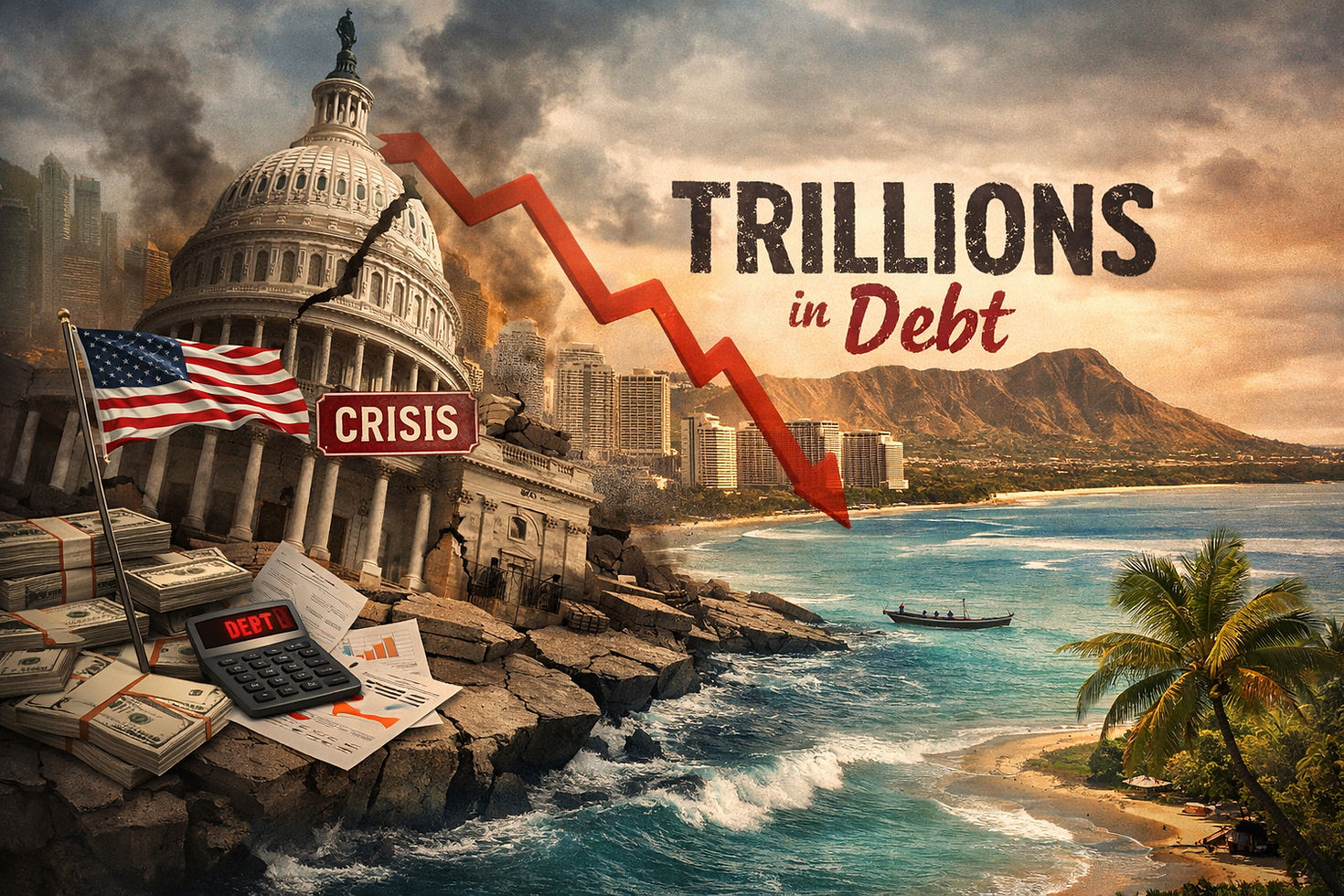
America’s Quiet Fiscal Crisis (And Why It Matters to Hawaiʻi)

A recent Treasury release shows the federal government holding about $6 trillion in assets against nearly $48 trillion in liabilities. Fortune covered the story here. When you include long-term promises like Social Security and Medicare, the total rises above $130 trillion over the next 75 years. That number is so big it’s easy to shrug off. It doesn’t feel real.
So it helps to bring it down to earth.
Imagine a household earning around $50,000 a year, spending far more than it brings in, and sitting on over a million dollars in obligations with very little in assets. Most people would recognize that situation immediately; it’s not sustainable. Now, the federal government isn’t a household. It can tax, it can borrow, and it can print money. But those powers don’t make the problem disappear. They just change how the consequences show up.
Instead of a sudden bankruptcy, the effects come more slowly. Prices rise. Savings lose value. Debt grows faster than the economy. And future generations inherit commitments they never agreed to. It’s less like a crash and more like a long, quiet erosion.
For Hawaiʻi, this matters more than most places. Our economy is deeply tied to federal spending, from military presence to infrastructure and programs. At the same time, we already deal with one of the highest costs of living in the country. That means if federal fiscal problems lead to inflation or instability, we feel it quickly. And intensely.
This isn’t really about one political party or another. It’s about a pattern that’s been building for decades. Year after year, spending exceeds revenue. Long-term promises expand without clear funding. And there’s very little political incentive to slow things down, because the costs are pushed into the future.
From a libertarian perspective, there’s also a deeper issue here. When government accumulates massive obligations, it’s effectively making decisions on behalf of people who don’t yet have a voice. It commits future workers, families, and communities to pay for today’s policies. That raises a basic question of fairness. Who gets to decide how much of the future is already spoken for?
At the same time, relying on debt and money creation to sustain government spending distorts the economy. It rewards proximity to power over productivity. It quietly transfers wealth through inflation. And it makes it harder for individuals and families to plan for the long term.
None of this means collapse is guaranteed, or that solutions are simple. But it does mean the current path isn’t something we can ignore forever. The longer these trends continue, the fewer good options remain.
For Hawaiʻi, the takeaway isn’t just to look to Washington and hope for reform. It’s to think about resilience here at home. Strong local food systems, more independent energy, tighter communities, and a culture of fiscal responsibility at the state and local level all help buffer against larger instability.
Big numbers in federal reports can feel distant and abstract. But the reality behind them isn’t. It shows up in the cost of living, in the value of our savings, and in the opportunities available to the next generation.
The real question isn’t whether the system can keep going a little longer. It’s whether we’re paying attention early enough to adapt before the consequences become unavoidable.


Comments